
A Guide to Choosing Art That Feels Like Home
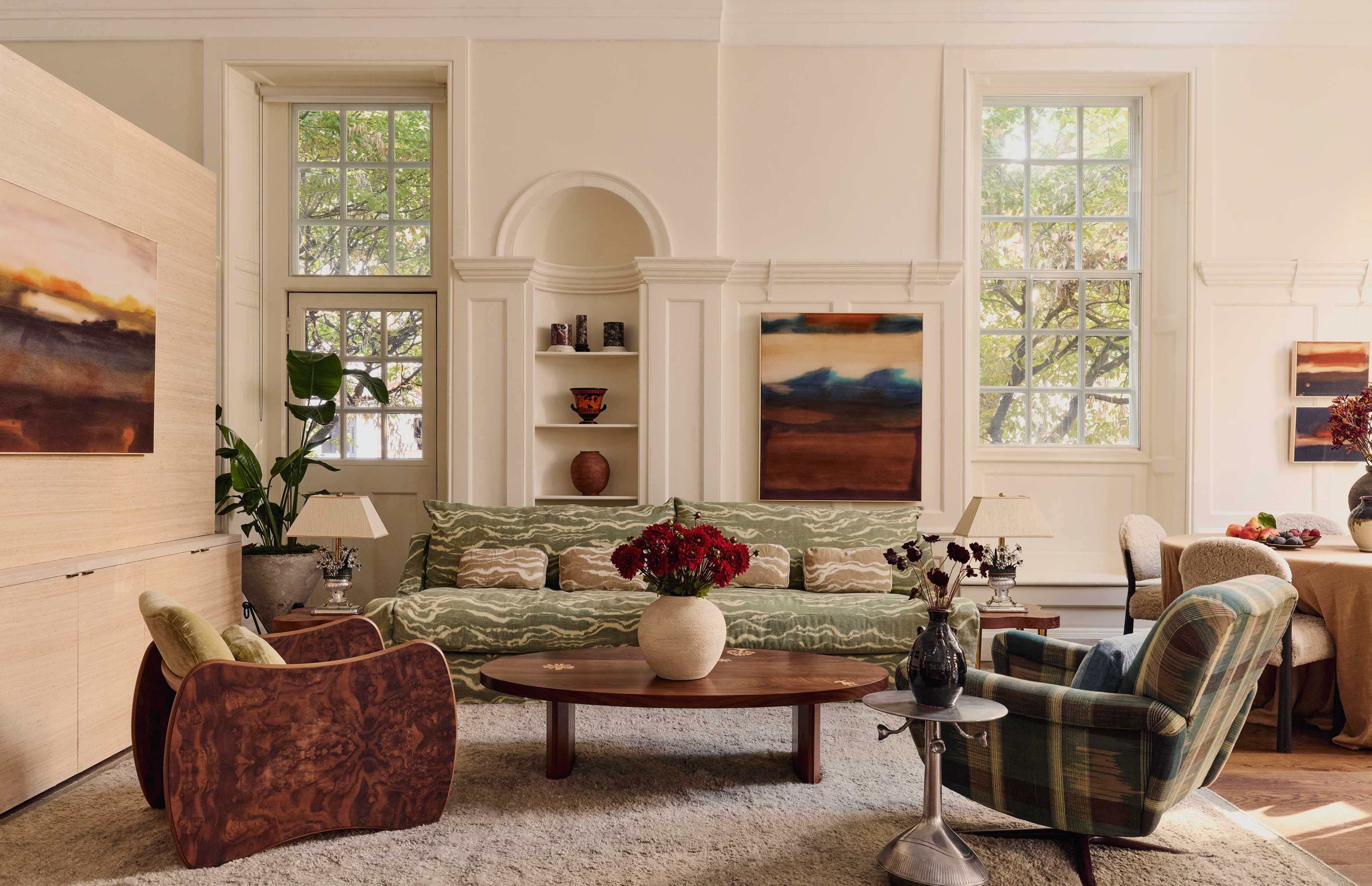
Art has a way of transforming a room long before any furniture is placed. For Sophie Ashby, the starting point of almost every scheme is either a significant artwork or a rug — something with soul, colour, and story. Beginning with art sets the emotional tone of a space, shaping the palette, mood, and material choices that follow.
“For me, the scheme always starts with either an important art piece or the rug,” - Sophie Ashby
Choosing art that feels like home is less about rules and more about connection. The pieces you live with should lift you, move you, and invite a moment of pause each time you pass. This guide offers thoughtful ways to begin — rooted in feeling, informed by design, and shaped by the belief that art should be lived with, not feared.
“The purpose of art is washing the dust of daily life off our souls.” - Picasso
1. Start With What Speaks to You
Before thinking about layout or colour, pay attention to what draws you in. Sophie often encourages people to trust their instincts:
“For someone decorating their own home, I would always advise them to stay true to their own style and use as many personal touches as possible.”
A work of art doesn’t need to be expensive or part of a trend; it simply needs to resonate. You might be drawn to expressive lines, muted tones, or the intimacy of a small sketch. That first emotional response is often the most genuine indicator of whether a piece belongs in your home.
If you’re unsure where to look, online platforms can be a wonderful way to explore. Sophie often recommends Saatchi Art, noting its breadth, accessibility, and excellent service — a place where first-time collectors can browse confidently.

2. Don’t Be Afraid to Begin Small
Many people live with bare walls not because they prefer minimalism, but because the art world feels intimidating. Sophie recognises this hesitation and often offers the same reassurance:
“I think people live with bare walls because they are intimidated by the art market or the idea of investing in art, but really your walls should just be filled with things you love.”
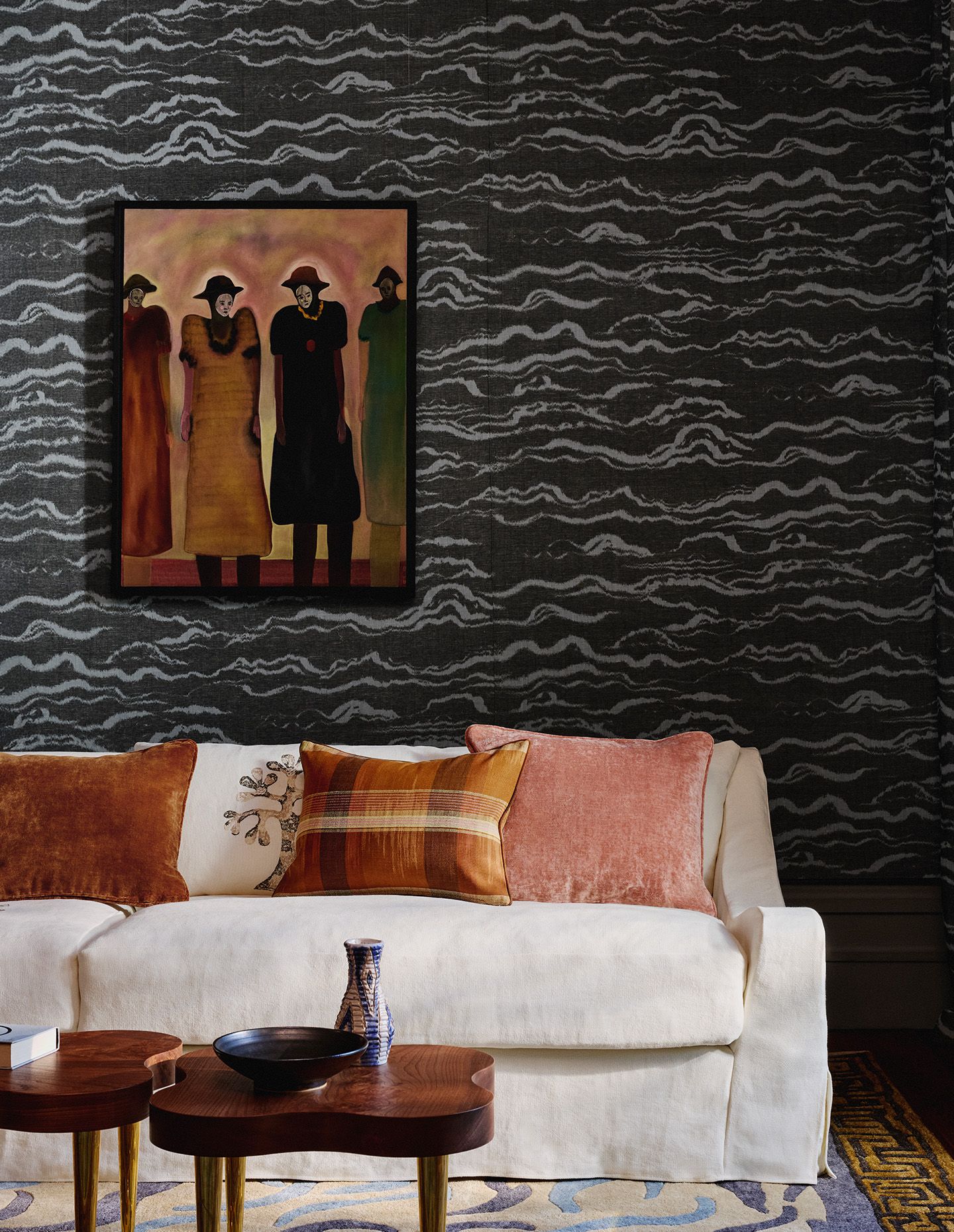
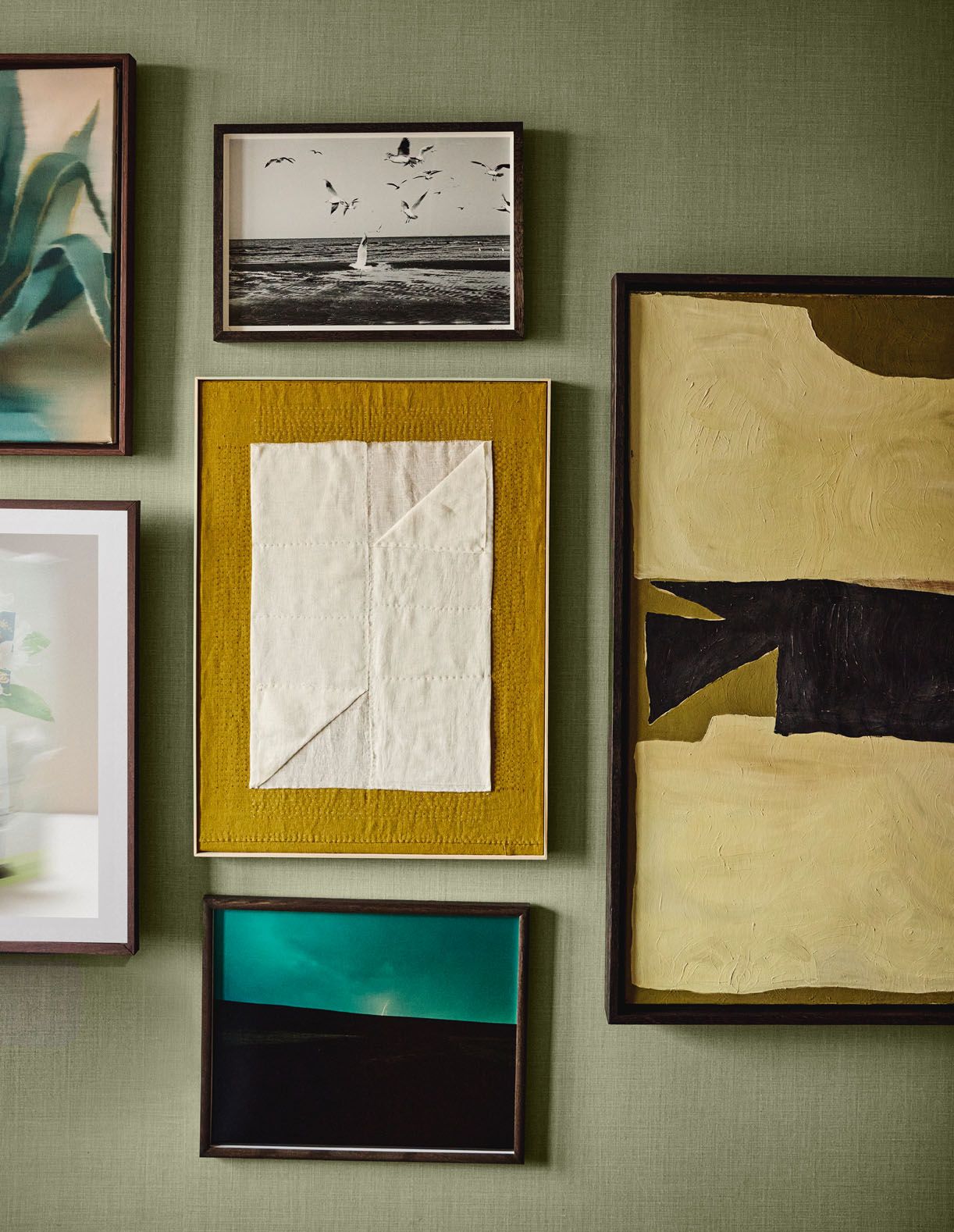
You don’t need a major piece to begin. Framed prints, postcards, sketches, personal photographs, even a found object can be a starting point. Layering these with books, ceramics, plants, and collected objects brings warmth and character to a room. Over time, small beginnings naturally grow into a more intentional collection.
3. Let Art Shape the Room Around It
Once you’ve found a piece you love, use it as an anchor. Starting a scheme with art — as Sophie so often does — offers clarity. The palette can be drawn from the work’s colours; the textures in a room can echo the movement or mood of the piece.
- A soft abstract might inspire a calmer space.
- A bold figurative work might lead to richer materials or deeper hues.
- A monochrome piece might encourage the use of varied textures for balance.
Art gives direction without dictating; it offers a framework for the rest of the room to evolve organically.


4. Think About Scale, Atmosphere & Proportion
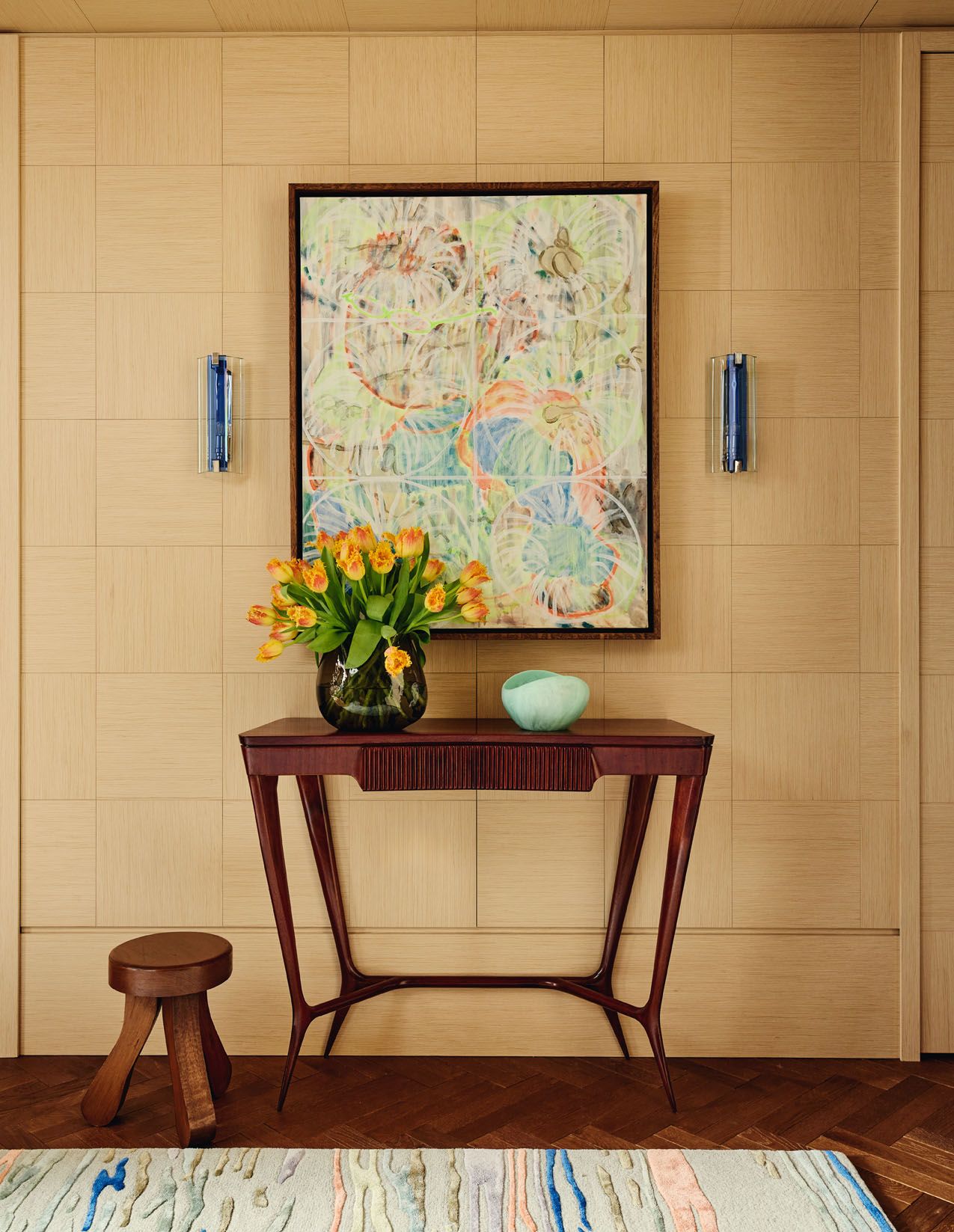
Scale has a quietly transformative effect. A large piece can act as a grounding gesture; a smaller work invites intimacy. Neither is “right” — it’s about what the space needs.
Consider:
- The height and width of the wall
- The furniture beneath or around the artwork
- How you want the room to feel — expansive, calm, lively, grounded
Even propping a piece on the floor temporarily can reveal whether it feels at home.
5. Choose Colour by Emotion, Not Exact Match
Art doesn’t need to perfectly coordinate with a room; it only needs to live comfortably within it. Look for tones that echo the room’s mood rather than matching fabrics or finishes.
A work with strong colour can enliven a neutral scheme, while muted art can soften a richly layered space.
Let colour guide atmosphere, not dictate it.
6. Collect Slowly & Intentionally
A home built with intention evolves over time. Allow your collection to grow slowly — through travel, galleries, online platforms, or the work of emerging makers.
Pieces collected gradually tend to carry memory and presence: small reminders of where you’ve been, what you’ve loved, and how your eye has changed.
There is no rush in building a collection. Let it unfold.