Studio Notes: On Upholstering Headboards
At Studio Ashby, design decisions often begin with small but important details. The headboard is one of them — setting the tone for a bedroom through proportion, colour and texture.
Sophie Ashby and the studio team share their approach to headboards in its projects, from choosing the right scale to using fabric and shape to create a focal point.
What should you take into consideration when choosing a headboard?
There are two main things to consider: form and colour.
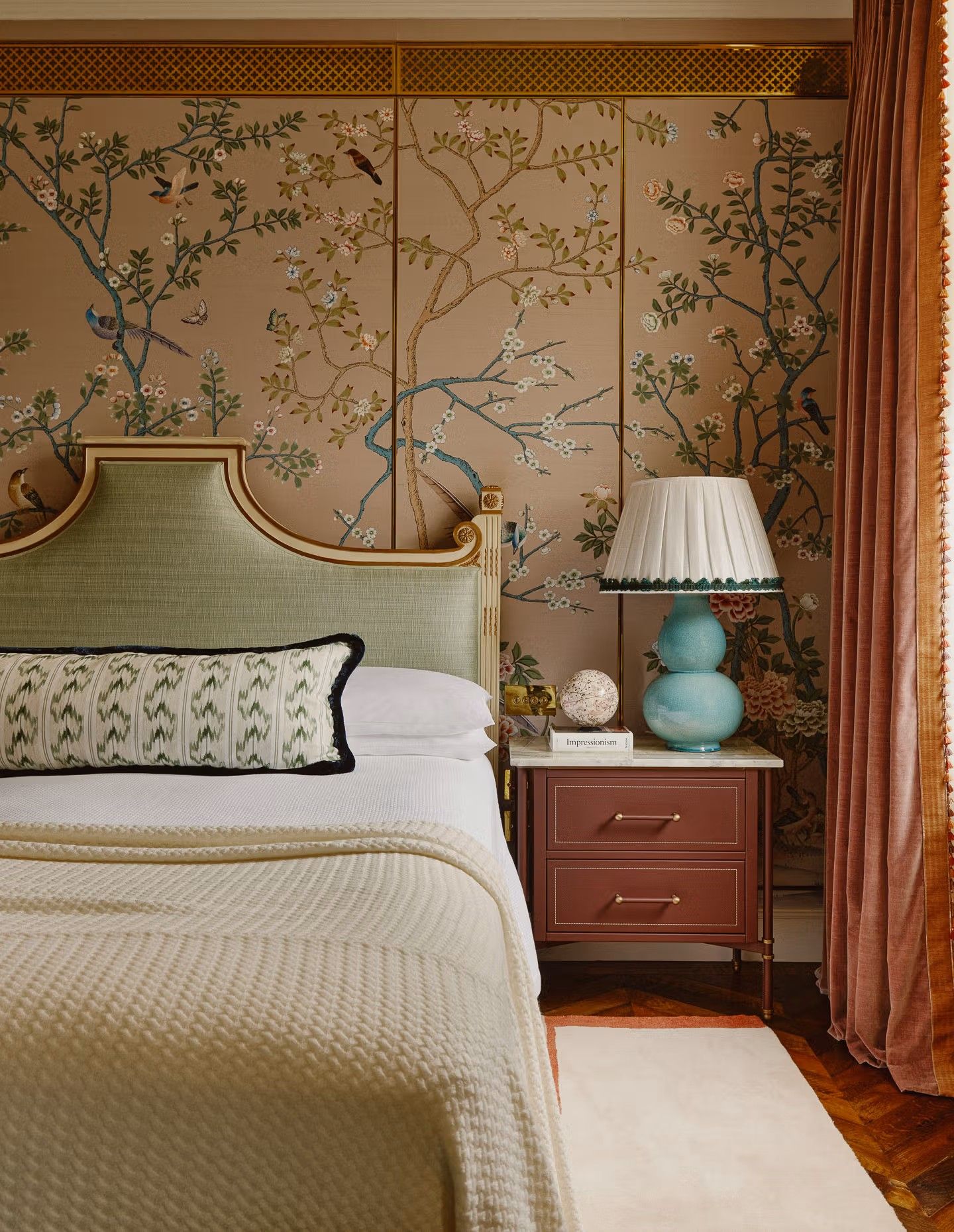
We often start a room with a piece of artwork and then coordinate the headboard fabric with the colour palette that develops from that. In a bedroom especially, colours should feel harmonious so nothing competes or feels too loud — ultimately it’s a space that should feel restful.
Scale and proportion are also very important. In a regular-sized room, I would avoid a headboard that feels too clunky or oversized as it can quickly become a large block in the middle of the room. I generally prefer upholstery that feels quite refined in its detailing — slender and visually light.

How can colourful or interestingly shaped headboards affect a room?
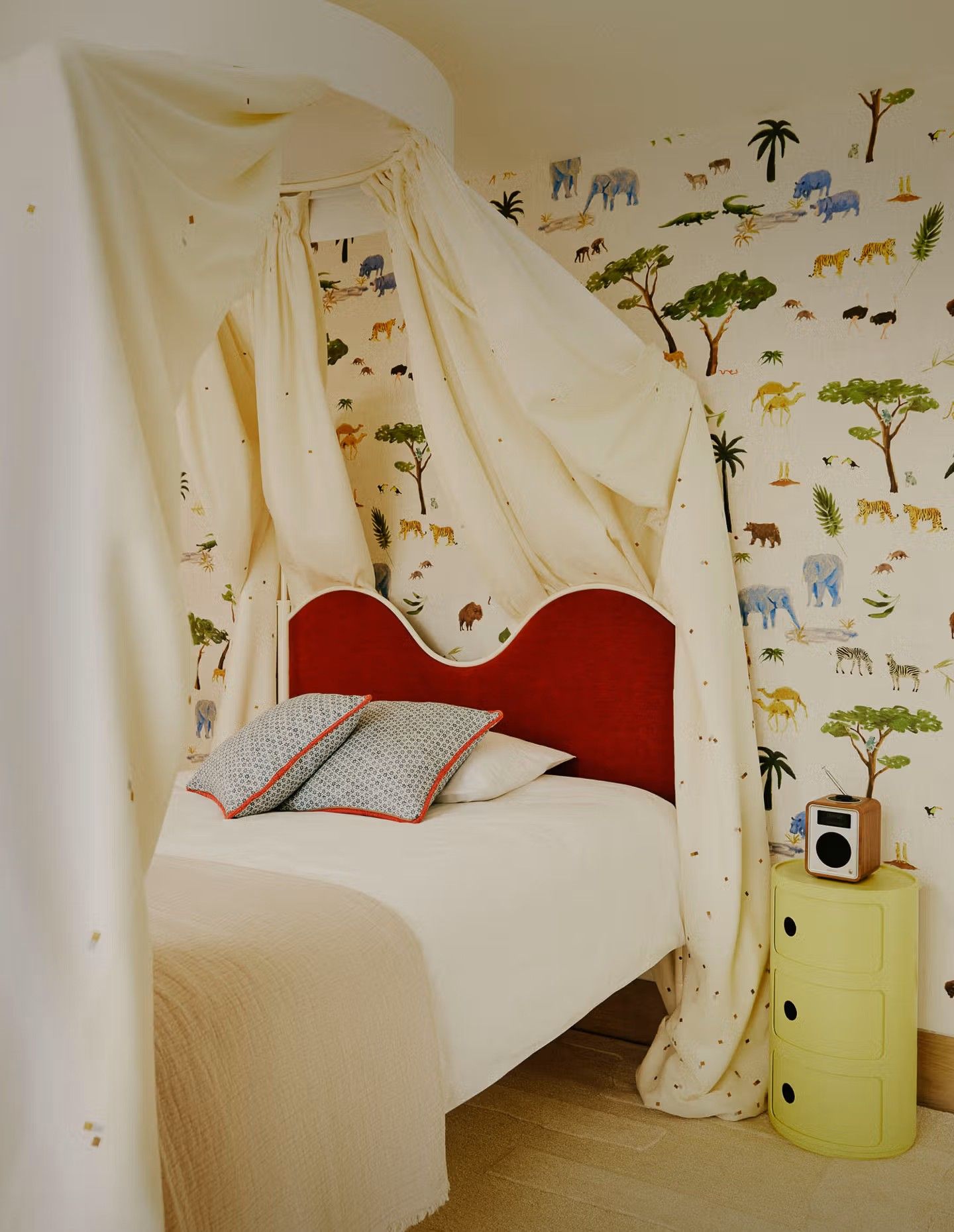
We love designing unusual headboard shapes — they can become a real focal point and introduce a playful element to a bedroom.
A helpful rule of thumb is that if the shape is quite distinctive, I usually choose a plain fabric so the silhouette can stand out. If the headboard shape is more simple, then it’s a great opportunity to introduce pattern.
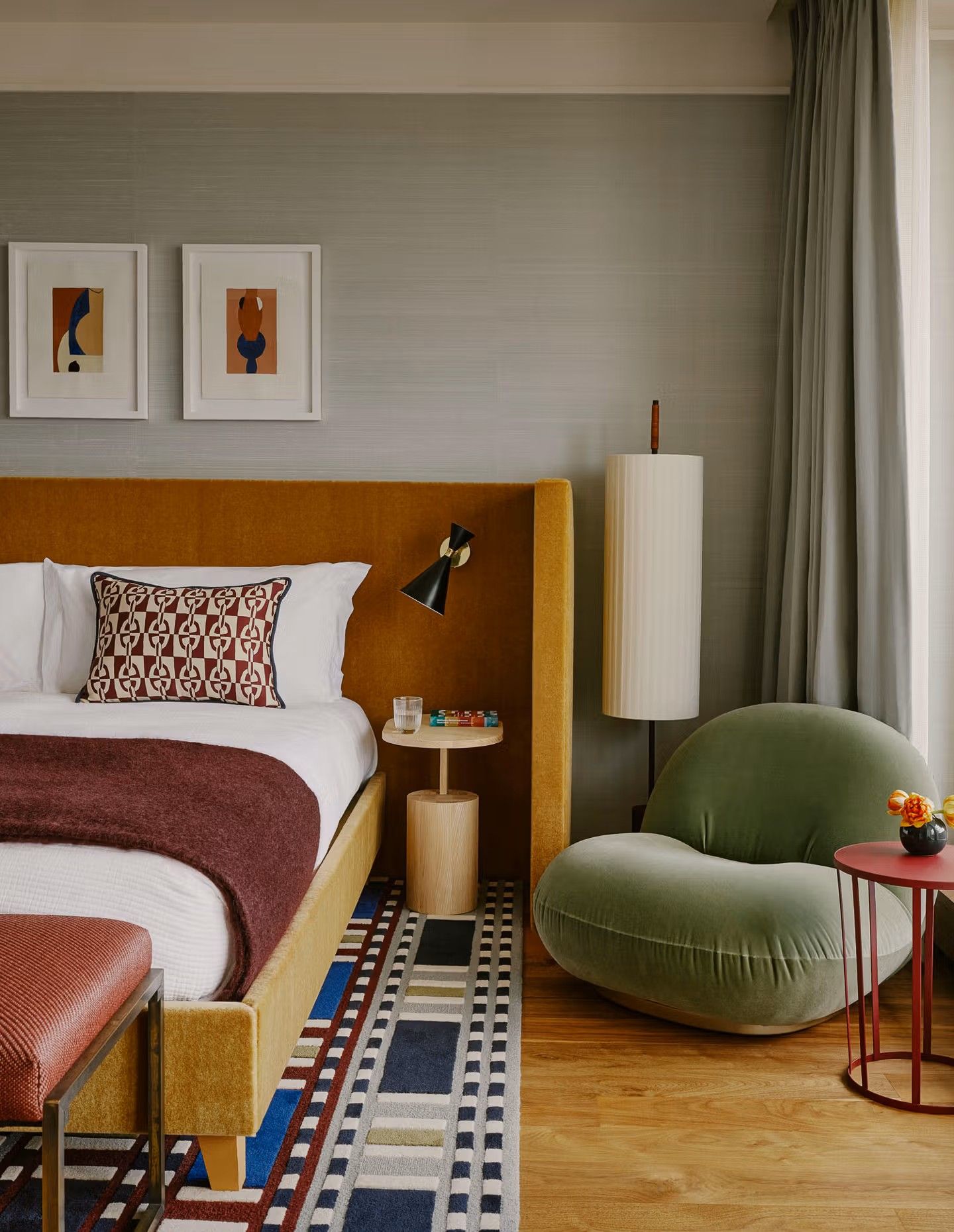
A wide, upholstered headboard can also make a subtle statement. It brings colour and texture into the room, can visually open up the space, and also allows you to integrate things like wall lights or electrical points.
What advice would you offer someone who wants a colourful headboard but isn’t sure what colour to choose?
I always suggest starting with a piece of art you love and plan to hang in the room. Take a colour from that artwork and use it as the basis for the scheme.
As long as the headboard fabric works with the rest of the palette, you can be quite bold and really showcase your personal style.
If you’re unsure about committing to a single colour, patterned fabrics can be very helpful as they incorporate multiple tones within one design. And if you’re more comfortable with a quieter palette, texture can create just as much interest — mixing raw and refined materials, natural fibres with smoother finishes, or subtle neutrals with richer tones.
Are there any common mistakes people make when choosing a headboard?
A headboard shouldn’t be an afterthought — it has the potential to enhance the entire design scheme.
It doesn’t have to be a plain beige block. If you already have a headboard but don’t love the fabric, reupholstering it can completely transform the look. Even a simple slipcover can make a big difference.
At home I have a headboard I don’t particularly like, so I’ve draped an antique African textile over it as a temporary solution.
I also tend to prefer medium-height headboards — usually around 130–140cm from the floor — which leaves space above for artwork.
What are the key features of a good headboard?
A headboard is a great opportunity to make a statement and play with colour, pattern and texture.
I enjoy experimenting with different shapes, contrast borders and piping details — it’s a place where you can be quite playful with the design.
Ultimately, it helps set the tone for the entire room.