Studio Notes: Rug Placement & Scale
Rugs are often one of the most influential elements within a room — grounding furniture, introducing pattern and shaping the overall palette. At Studio Ashby, they can just as easily complete a scheme as inspire one from the very beginning.
We asked Sophie Ashby to share how the studio approaches rugs, from antique kilims to oversized Berber pieces.
What’s your designer’s approach to rugs — do they tend to come later in a scheme, or can they spark the whole design?
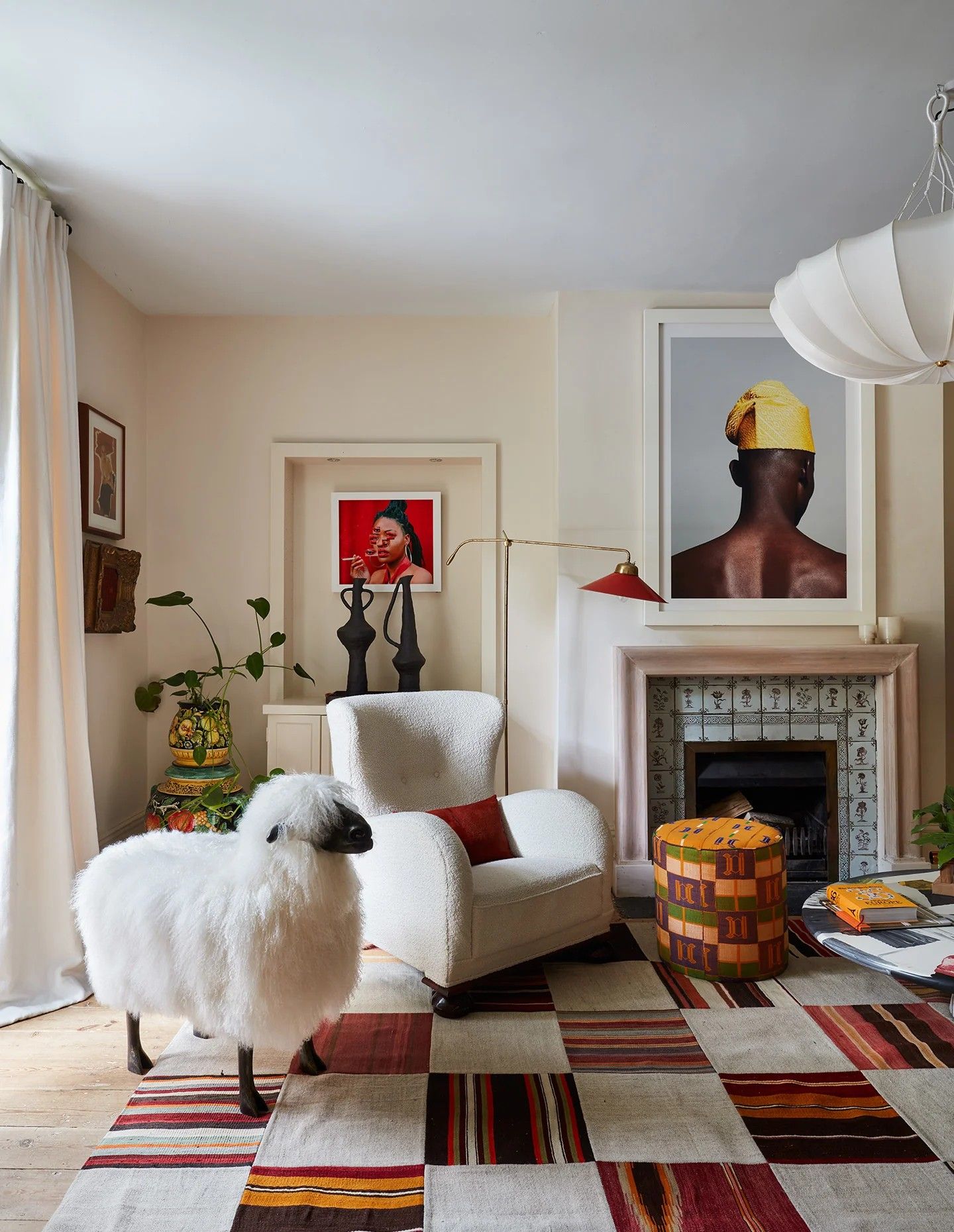
For me, the scheme usually starts with either an important artwork or the rug. I love pattern — particularly geometric or tribal designs — and I’m not afraid of making a statement with a rug. Once you have that, you can layer in plains or smaller-scale patterns to soften everything around it.
I also love antique rugs, but in modern spaces rooms often call for something square, which usually means having one made. That’s a process I really enjoy — selecting yarns, working out colour distribution, and thinking about pattern and scale.
You often use kilims and Berber rugs. What do you like about them, and where do they work best?
They work extremely well in pared-back interiors, particularly those with a simple or Scandinavian influence. A kilim in a contemporary kitchen, for example, can completely transform the space.
I also love the shaggy, deep pile of a Berber rug. They’re incredibly classic and surprisingly versatile — they work with many different styles of furniture.

Vintage kilims and flatweaves often come in long, narrow shapes. How do you like to use those?
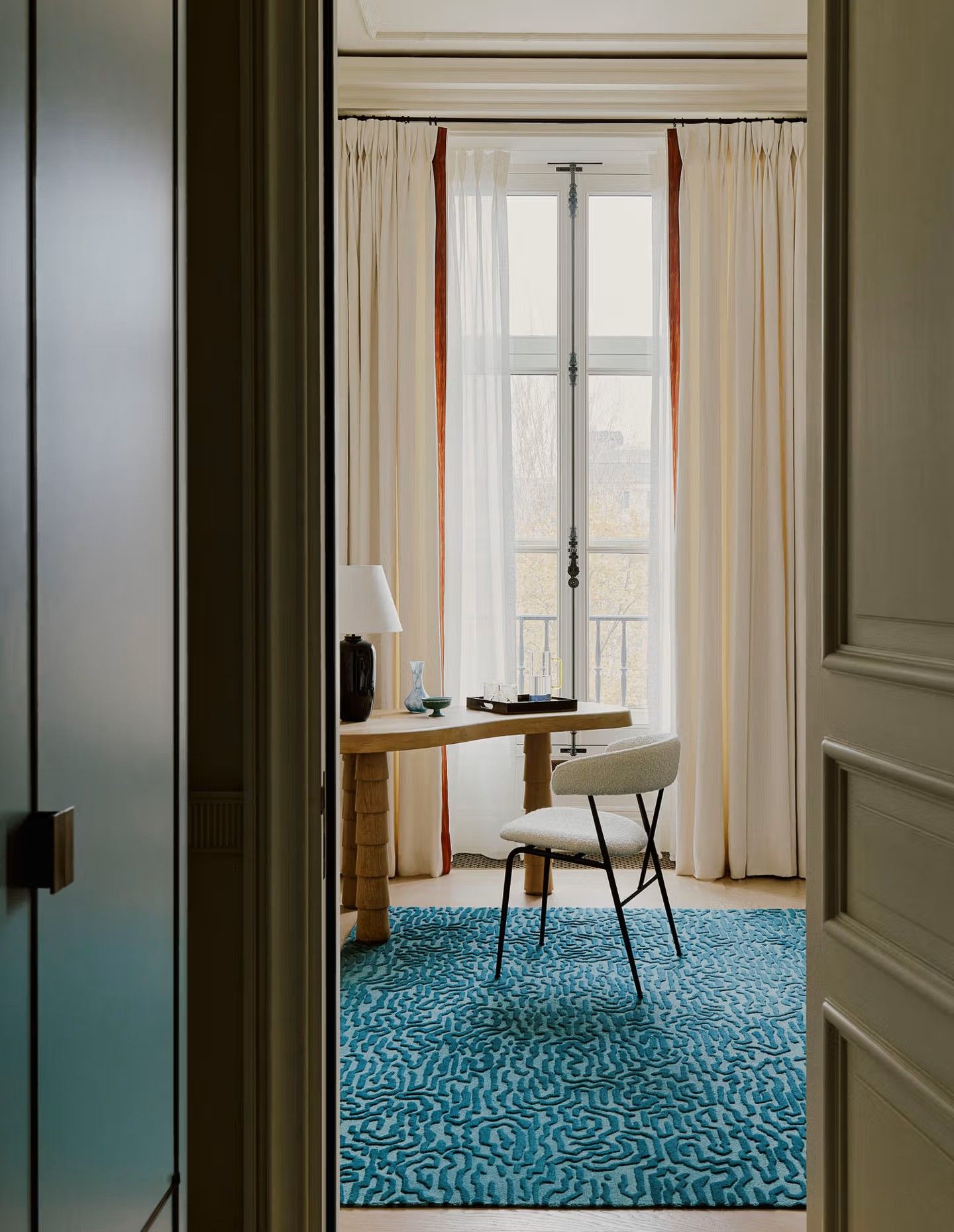
I often place runner-style rugs on either side of the bed. There’s nothing nicer than waking up and stepping onto something soft.
This works especially well when the bedroom has timber flooring, which I generally prefer to carpet. Timber gives you much more flexibility to introduce rugs exactly where you want them.
What about smaller colourful rugs — where do you tend to use those?
Honestly, rugs can go anywhere — there aren’t really any rules.
I often buy them and keep them in storage because they’re so useful. Like throws or blankets, they can be placed almost anywhere to instantly bring warmth and character to a room.
Children’s bedrooms are particularly good for smaller rugs. I like placing them slightly off-centre at the foot of the bed, creating a little zone where children naturally gather to play.
Some rugs, like Beni Ourains or Boucherouites, can be very large. How do you position those?
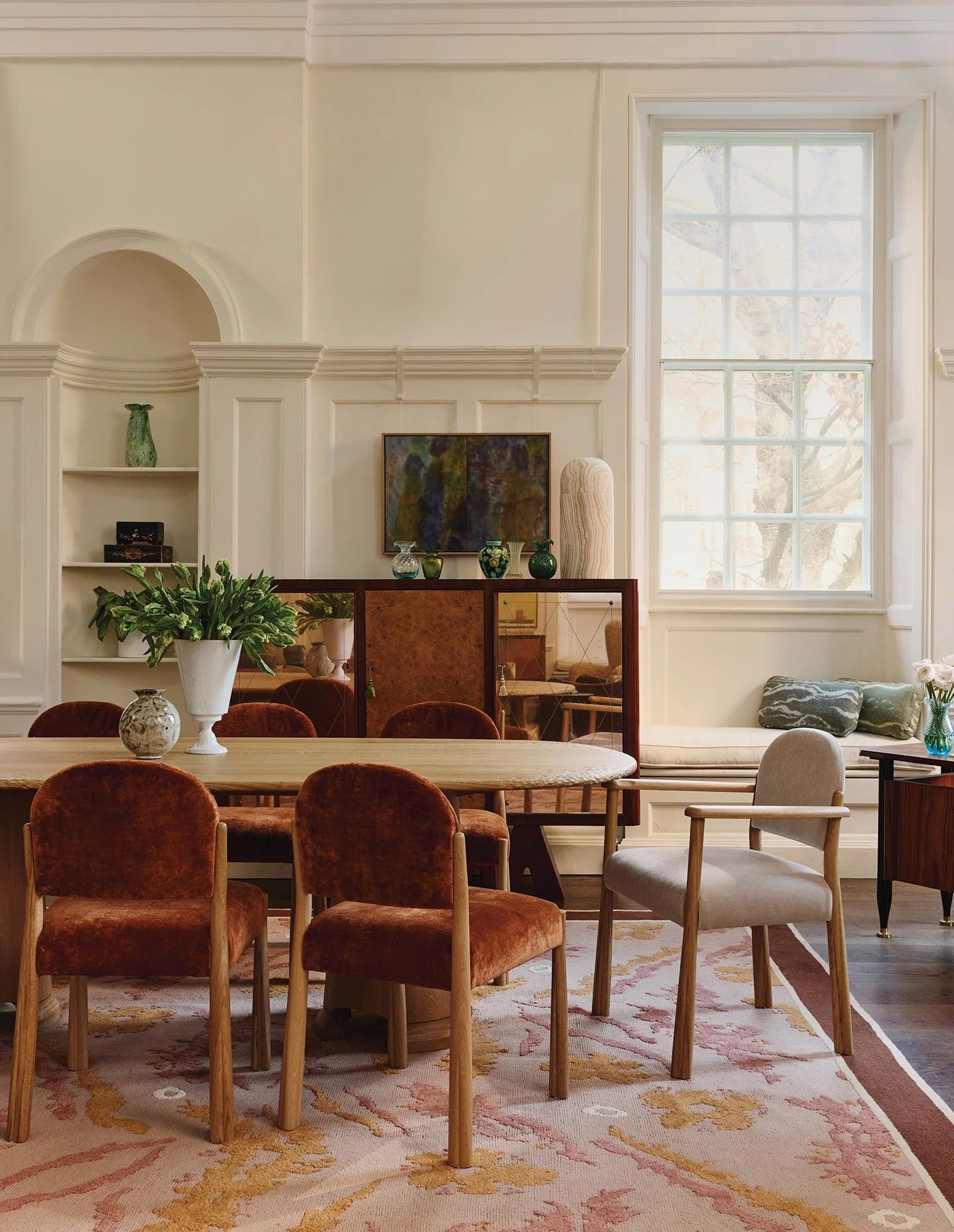
Personally, I prefer rugs to capture all the furniture in a living space. Rather than just sitting under a coffee table or the front legs of a sofa, I like them to be large enough to encompass everything.
I tend to think bigger is better when it comes to scale. A larger rug feels more dramatic and often suits the proportions of contemporary architecture much better.
Do you ever use rugs on walls?
Yes — I love textiles on walls. Tapestries especially.
I’m currently searching antiques markets and dealers for a special piece for a project in Chelsea. I’m very drawn to texture and materials, so a rug or textile as a wall hanging can be incredibly beautiful.
They also invite you to get close, to study them and even touch them — which adds another dimension to a space.
Are there colour combinations you particularly love when designing with rugs?
Anything can work, but most schemes I design tend to begin with a black-and-white base. From there, colour can be layered in through rugs, textiles and artwork.